HUMANIFOLD
Generative web artwork, 2026
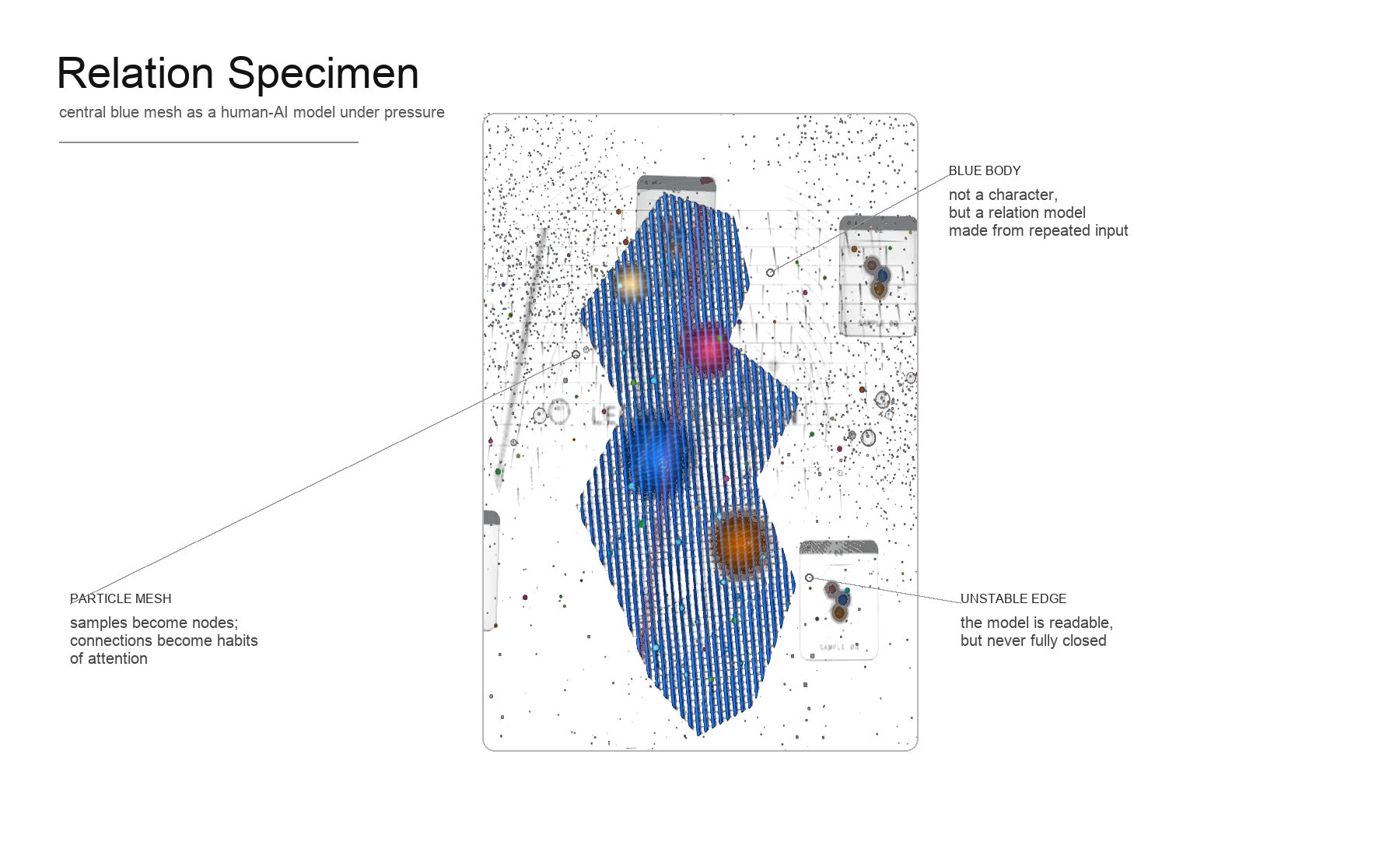
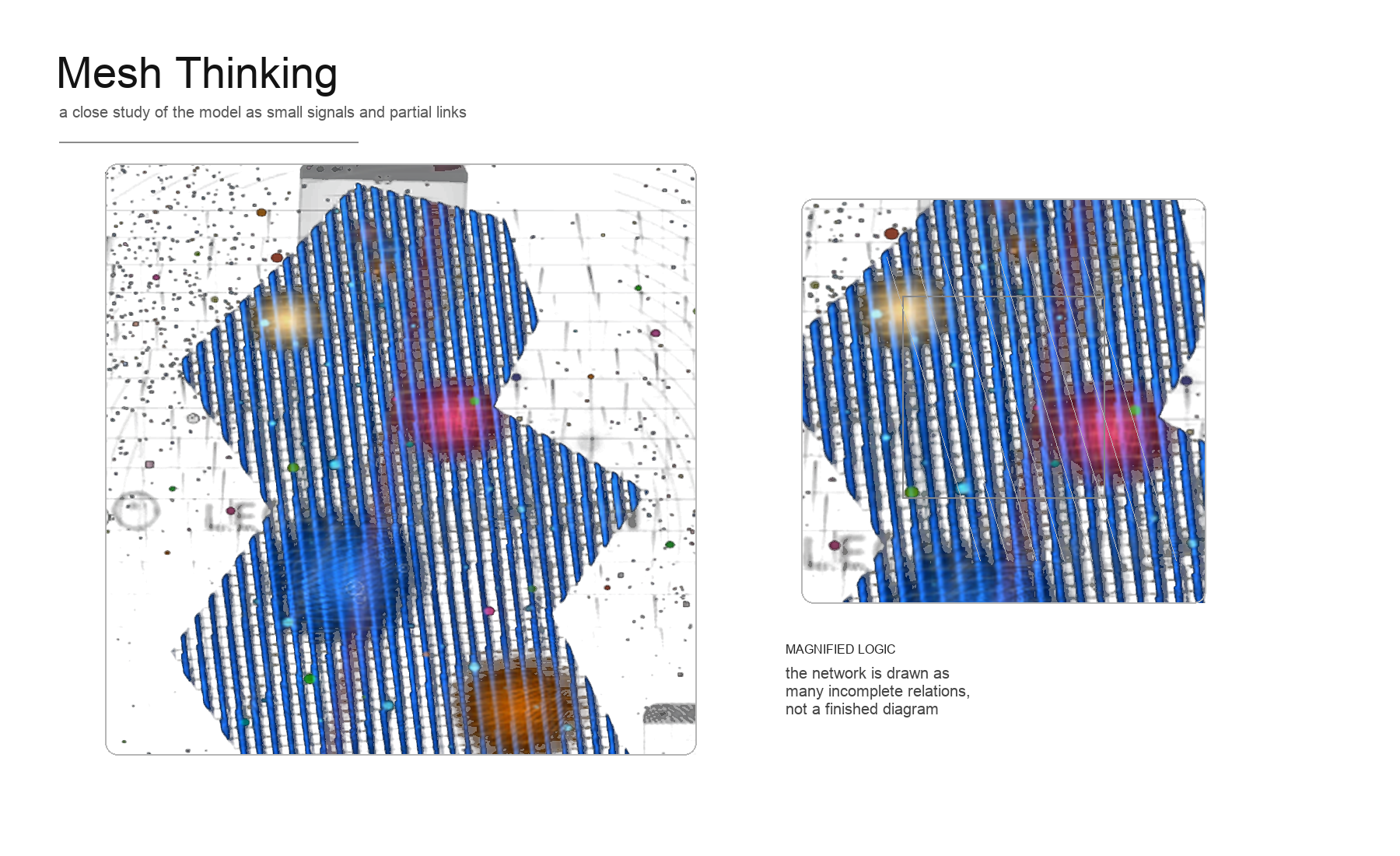
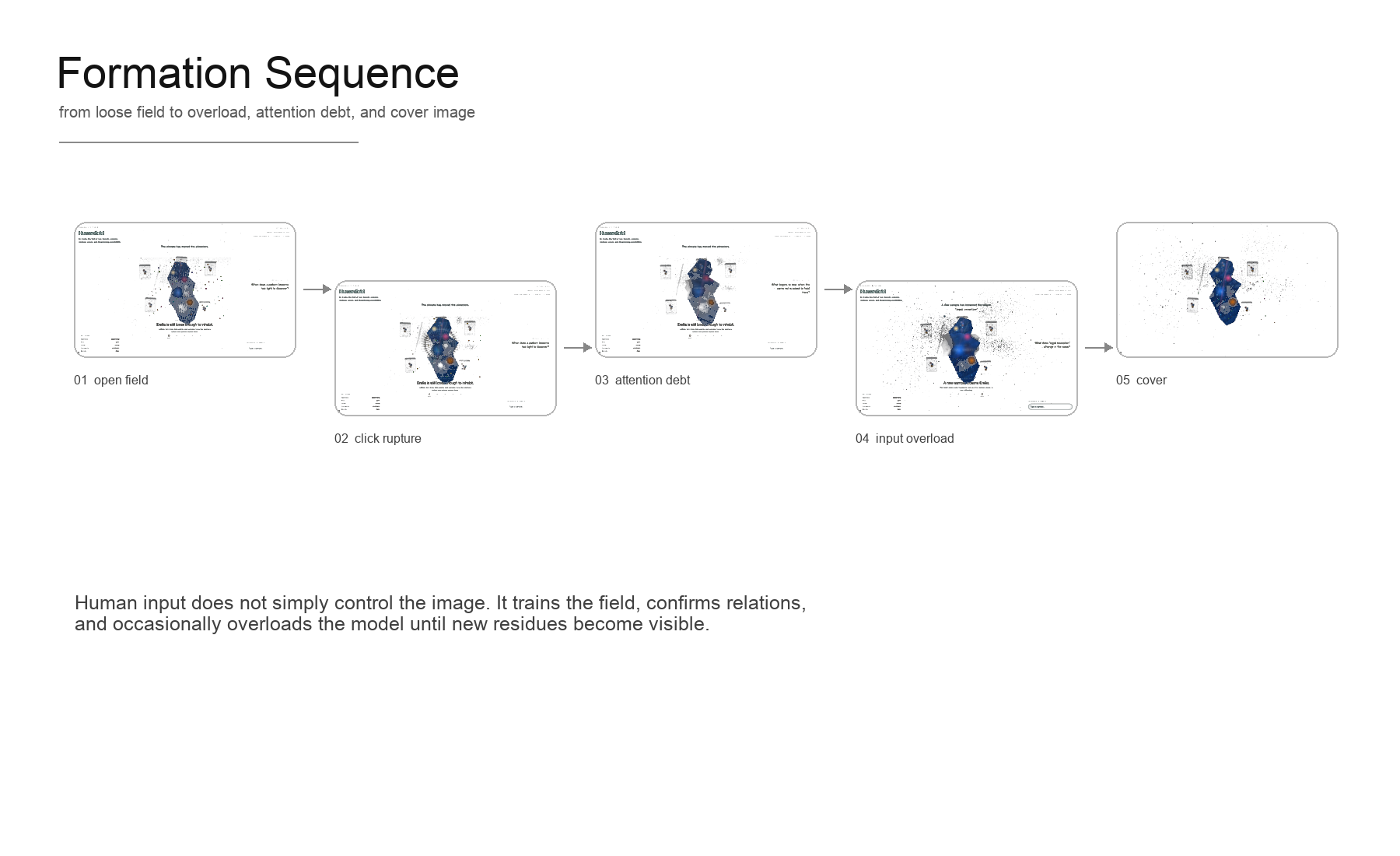
Humanifold is a generative web artwork about how humans and AI gradually shape each other through repeated input. The work follows a quiet feedback loop: humans give words, images, preferences, examples and emotions to AI. AI reorganises these samples into patterns, rankings and judgements; humans then act through those patterns, producing new data that returns to the system. At the centre is a blue relation mesh formed through input, feedback, pattern-making and leakage
✳︎
✳︎
✳︎
✳︎
✳︎ ✳︎ ✳︎ ✳︎
Who Trains Attention?
The mesh is imagined as a city of relations that gradually becomes too dense to inhabit, echoing Calvino’s Ersilia. Through James C. Scott’s idea of legibility, the work asks what is lost when complex signals are made readable. Following Herbert A. Simon’s attention thesis, it treats attention as something shaped through repetition, confirmation and overload.
As the mesh becomes clearer, it also becomes more selective: a structure for seeing, remembering and forgetting.
Humanifold presents AI as a relation field shaped by repeated samples, choices, feedback and misreadings. As this field becomes clearer, attention becomes more habitual. The work asks what must leak, rupture or mutate for another relation to become visible.